
To achieve herd immunity, rapid vaccination is the only hope.

While the Constitution makes everyone in India eligible to work anywhere in the country, states have used legal loopholes to frame laws.

While consumers feel that petrol pinches directly, diesel hurts indirectly, as it is an input in almost all the goods and services we use.
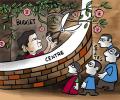
Consumers are paying an exorbitant 180 per cent tax on petrol, and 140 per cent on diesel in Delhi and in most other towns in India. Little wonder then that the central government expects a staggering Rs 3.46 trillion by levying excise duties on retail sale of the two fuels this year, and Rs 3.2 trillion the next. States would generally have had reason to cheer, as they command a 41 per cent share in Centre's tax revenues. But as the Centre has raised excise duties in the form of "cess," the revenue proceeds are by nature not shareable with states.

To make possible discretionary spending including capex and that on welfare, the government decided to borrow more than planned in FY21 -- Rs 12.7 trillion.

That's a big change that was made possible due to corporate tax cuts. Corporation tax collection in FY22 will be lower than even the FY18 levels, reports
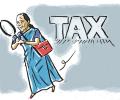
The continuing fiscal stimulus is heavily tilted towards capex, to the extent that it chips away a part of revenue spending. Accounting for other areas of revenue expenditure, such as salaries, pensions, subsidies and defence (committed spend), the room to spend on welfare schemes, health and education will narrow in FY22.

The PM's visit would signal a strong intent towards making sure India becomes a beneficiary as vaccines become a massively traded commodity in the coming years.

Overall, small savings have amassed Rs 1.17 trillion from April-September - 26 per cent more than the previous year. But in those six months, the economy lost 24 per cent in the first three months, and is slated to lose 10 per cent in the second quarter.
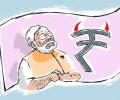
It is a classic case of extremes: The worst contraction in GDP along with the highest-ever levels of cash in the economy; and a severe dent in consumption together with strong growth in bank deposits and digital payments.

Women leaders, succession planners and lawyers say doors in family businesses are opening but a stronger push is needed.

Data shows that the current system of decentralised marketing and centralised procurement helps Punjab and Haryana farmers the most, while its efficacy in other states has been poor. Experts and farm leaders say success of the laws rests heavily on implementation.
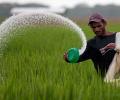
The government's main rate setting panel suggested that this be done in two tranches of Rs 2,500 each in the kharif and rabi seasons.

Experts attribute this trend to a combination of end of capital expenditure cycle, increased automation, RIL's preference for time-bound labour contracts, and telecom and retail's outsourced human resource model.

Experts point out teaching in its online avatar helps address women specific concerns, like care-giving responsibilities, lack of safe public and work spaces, and the inability to move to cities.

'Given that the globally most prevalent clade of SARS-CoV-2 is also predominant in India, any vaccine or drug that gets developed in the world should also prove effective in India'
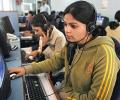
There was a worry that such a policy would hamper businesses, create resentment among the male staff and perhaps also discourage companies from employing women. However, this has proved to be misplaced.

One in five students drop out from school.
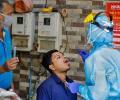
Some of India's biggest employers are testing for antibodies to either comply with regulatory norms or gauge the effectiveness of precautionary measures.

In a curious move, Reliance Industries' (RIL) executive director and Mukesh Ambani's trusted aide PMS Prasad pledged 600,000 shares of the company last month, which is 93.75 per cent of the total shares he owns in RIL. Prasad owned a total of 640,000 RIL shares and his compensation stood at Rs 11.15 crore in FY20.
 © 2026 Rediff.com - Advertise with us - Disclaimer - Privacy Policy - Sitemap - Feedback - About us - Terms of use - Grievances